
 By Emery Elliot
Modern society operates on an intricate framework of rigid schedules, digital notifications, and highly predictable environments. From the morning alarm clock to the evening commute, human behavior is continuously shaped by the demands of institutional timelines and professional obligations. While this structure fosters economic productivity and societal organization, it simultaneously imposes a profound psychological tax. Individuals increasingly experience a phenomenon known as temporal compression, where the relentless repetition of identical, highly regulated days causes time to appear to accelerate, leaving little room for spontaneous choice or mental restoration.
Camping serves as a powerful antidote to this hyper-structured existence. By deliberately removing oneself from the built environment and stepping into a wilderness setting, an individual actively disrupts the artificial architecture of daily life. Camping strips away the digital mediation and corporate deadlines that govern modern behavior, replacing them with fluid, nature-driven rhythms. This transition allows participants to reclaim personal autonomy, recalibrate their internal biological clocks, and rediscover a sense of time that is measured by environmental shifts rather than digital displays.
Deconstructing the Micro-Management of Modern Life
To understand how camping facilitates an escape from structure, it is necessary to examine the sheer volume of regulation that defines contemporary existence. The average person navigates a world where physical spaces are engineered for specific functions and hours are meticulously cataloged.
The Tyranny of the Chronometer
In the modern workplace and home, time is commodified. Schedules are broken down into precise increments, encouraging people to continuously project their attention into the immediate future. This constant anticipation prevents individuals from experiencing the present moment, creating a chronic baseline of low-level anxiety. Every action is evaluated based on efficiency, optimization, and output, leaving minimal space for unstructured exploration.
Digital Enclosure and Constant Availability
The proliferation of smartphones, enterprise communication software, and hyper-connected devices has effectively erased the boundaries between professional responsibility and personal life. Motorists, office workers, and students find themselves trapped in a state of continuous partial attention, where a vibrating pocket device or a glowing screen can instantly disrupt their immediate reality. This digital enclosure ensures that even during designated periods of rest, the mind remains tethered to societal structures and the expectations of others.
The Wilderness Transition: Swapping Artificiality for Authenticity
When an individual packs a shelter and ventures into a state park, national forest, or remote backcountry zone, they engage in a radical act of spatial and behavioral deconditioning. The wilderness environment imposes an entirely different set of rules that fundamentally alters how decisions are made.
The Restoration of Autonomy
In a wilderness setting, the external mandates that dictate behavior vanish. There are no corporate meetings to attend, no traffic lights to obey, and no digital calendars reminding you of uncompleted tasks. The individual is suddenly confronted with absolute choice regarding the allocation of their time.
-
Task Fluidity: If a camper chooses to spend three hours sitting by a stream doing nothing productive, there are no structural penalties.
-
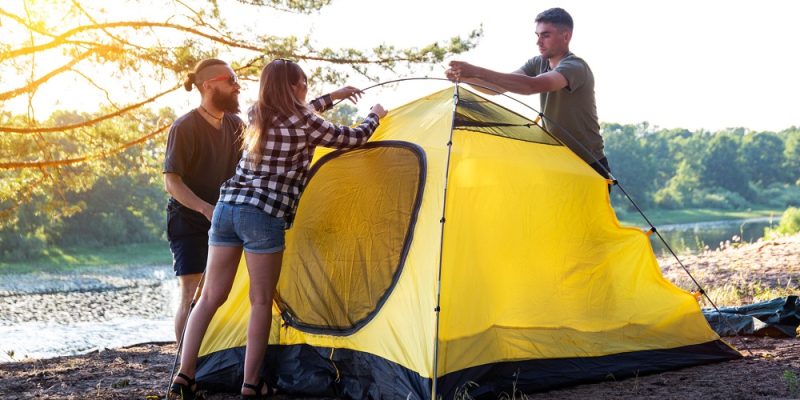
Self-Directed Labor: The labor required in a camp setting—such as gathering firewood, pitching a tent, or purifying water—is directly linked to immediate physical survival and comfort. This contrasts sharply with the abstract, multi-layered tasks of the modern knowledge economy, providing a deep sense of tangible satisfaction.
Reconnecting with Circadian Rhythms
Modern infrastructure relies on artificial illumination to decouple human activity from the natural cycle of day and night. While this allows for twenty-four-hour productivity, it disrupts the human endocrine system and creates systemic sleep deficits.
Camping forces a return to solar time. As the sun sets, the ambient light fades, and the drop in temperature naturally triggers the production of melatonin, prompting early rest. Conversely, the natural increase in morning light and ambient temperature coaxes the body awake without the jarring intervention of an audio alarm. This biological realignment restores deep sleep architectures, allowing the nervous system to recover from the chronic overstimulation of urban environments.
The Cognitive Benefits of Unstructured Environments
The human brain is not evolutionarily adapted to process the dense array of artificial stimuli found in modern cities. Billboards, traffic sounds, flashing screens, and crowded spaces require continuous, active mental filtering, which quickly exhausts a person’s capacity for directed attention.
Attention Restoration Theory
Psychological research highlights that natural environments engage human focus in a completely different manner, a concept known as soft fascination. The movement of leaves in the wind, the patterns of moving water, and the changing shadows on a rock face capture the attention effortlessly without requiring conscious cognitive processing.
This soft fascination allows the prefrontal cortex—the region of the brain responsible for problem-solving, emotional regulation, and willpower—to enter a state of deep rest. By stepping away from the structured cognitive demands of spreadsheets, notifications, and complex social performance, campers experience a marked restoration in mental clarity, creative problem-solving capability, and emotional resilience.
The Re-Estimation of Time
When days are highly structured and predictable, the brain does not need to record unique memories, causing periods of time to blur together in retrospect. In contrast, a camping trip introduces novel sensory inputs, unpredictable weather variations, and unique physical challenges. The brain becomes highly alert to its immediate surroundings, processing new data continuously. This heightened awareness stretches the perception of time, making a brief weekend in the woods feel far more substantial and memorable than an identical weekend spent sitting on a couch inside a suburban home.
Fostering Deep Interpersonal Connections
The structural demands of modern life frequently fragment familial and social units. Family members often operate on different schedules, eating meals at varying times and retreating into individual digital screens during periods of shared domestic space.
Camping removes these digital distractions, forcing a physical and social convergence around a singular focal point: the campsite. Preparing a meal over a camp stove or a fire requires cooperation and shared labor. Without the option to look at a television or browse social media feeds, individuals are guided toward sustained, face-to-face conversation.
The stories told around a campfire are unhurried, free from the time constraints of typical social interactions. For couples, families, and friend groups, this shared, unstructured space strengthens relational bonds, allows for the processing of unexpressed thoughts, and builds a repository of shared memories that anchor the relationship long after the tents are packed away.
Frequently Asked Questions
How does car camping differ from backpacking regarding the quality of routine disruption?
Car camping allows individuals to transport heavy equipment, elaborate cooking setups, and comfortable bedding directly to a designated campsite, making it an accessible option that focuses on physical comfort and relaxation. Backpacking requires carrying all survival gear on one’s back into remote areas, introducing a higher level of physical challenge and isolation. Both methods effectively break daily routines, but backpacking offers a more absolute separation from modern infrastructure, while car camping provides an easier logistical entry point for stressed individuals.
What is the specific impact of campsite food preparation on psychological well-being?
In a typical household, cooking is often viewed as a time-pressured chore that must be completed quickly between work and evening obligations. At a campsite, the process of preparing a meal becomes a central event rather than a peripheral task. Cooking over an open flame or a portable burner requires patience, active fire management, and adaptation to environmental factors. This slow, mindful engagement transforms eating into a sensory experience, highlighting the direct connection between effort and sustenance.
How should an individual manage text notifications if they must remain reachable while camping?
If complete digital disconnection is impossible due to family or professional emergencies, a camper should implement strict containment strategies. Instead of keeping the phone in a pocket where it can be checked habitually, store the device inside a backpack wrapped in protective clothing. Set the device to silent mode, allowing only specific white-listed contacts to trigger an audible ring, and establish a single, brief window during the day to check for critical updates before returning the phone to its storage location.
Why do people occasionally feel a sense of vulnerability or anxiety during their first night of camping?
Stepping away from the absolute security of solid walls, deadbolt locks, and predictable environmental controls can initially trigger a primitive survival response in the human brain. The unfamiliar sounds of the forest, the darkness of the night sky, and the thin barrier of a tent wall can cause a temporary spike in alertness or anxiety. Acknowledging that this reaction is a natural evolutionary response to a novel environment helps individuals process the fear, ultimately leading to a profound sense of self-reliance once the night passes safely.
How does weather variance contribute to breaking down a perfectionist mindset?
Modern life allows humans to maintain a climate-controlled existence regardless of external weather conditions. Camping exposes an individual directly to the unpredictability of nature, including sudden rain showers, shifting winds, and unexpected temperature drops. When a downpour occurs, a camper cannot simply press a button to alter the environment; they must adapt by adjusting tarps, changing layers, and accepting the reality of the situation. This forced flexibility directly challenges perfectionist tendencies, teaching valuable lessons in acceptance and adaptability.
What is the specific mechanical function of choosing a primitive campsite over an RV campground?
Primitive campsites lack electricity, running water, and localized waste hookups, requiring campers to pack in all necessary water or utilize filtration tools, while relying on battery power or solar energy. This layout maximizes the disruption of modern convenience dependencies. RV campgrounds often feature paved pads, electrical hookups, and wireless internet access, which can recreate the exact domestic patterns and digital habits the traveler is attempting to escape.
How long should a camping trip last to experience a full psychological reset?
While even a single night in a tent provides a brief escape, psychological adaptation to a natural environment typically requires a minimum of three consecutive days. The first day is often dominated by residual stress and the habitual impulse to check digital devices. By the second day, the nervous system begins to settle, and by the third day, the internal biological clock aligns fully with solar rhythms, allowing the participant to experience the deep attention restoration and cognitive calm associated with wilderness immersion.


